Monday, 26 July 2010

It's a bug's life

It was a rather sunny weekend last weekend and so I decided that I would head off into the wilderness to try and photograph some insects...after all, how hard can it be?


The first thing I noticed was that while you expect to see wildlife everywhere, it is actually quite difficult to spot it and so you have to uber-concentrate in order to spy a potential wee beastie. Once I had spotted a little critter, I quickly hurried over with my heavy footed size 10s and whatever it was that was lurking there, quickly disappeared into the long grass. This happened over and over and an hour in without a single photograph was starting to become frustrating. Therefore, I would have to become one with the world and dust off my ninja skills...'crouching Neil, hidden dragonfly'.


I had been chasing a butterfly for quite some time, but trying to get a photo of one was proving near impossible for me...but I did get close...ish!


OK, this wasn't going into National Geographic, so I decided that the quick moving and shy insects were too well adept to spotting me. So I would pick off some slow moving bugs if I could find them and gradually improve my skill at sneaking up on them.


So I managed to sneak up on one of the slowest I could find! :) This little fella didn't have much choice about being photographed! If I couldn't shoot a butterfly, I would shoot one before it became a butterfly!

The problem was that to get any decent close up images of bugs, means you need to shoot with a macro lens, this in turn means you need to get fairly close to the subject in order to photograph it...this is the point that they usually scurry/fly away.


The second problem with shooting a macro image is that you have a really shallow depth of field. It is so shallow that the front end of a bug can be in focus while the back end is out of focus. Now add in a multitude of variables like the wind blowing the grass reed that the bug is sat on, your breathing while holding the camera, the bug moving, bad balance while crouching, and you will end up with a soft image on the focal point. This is a real pain when you might only get one chance to photograph it before it hops off from the sound of the camera click.

After a lot of missed opportunities and many out of focus shots, I started to become a bit better at creeping up on the creepy crawlies and so I managed to get a few nice shots for my efforts.


I should also mention the light issue here as well. Flying bugs tend to move at a very fast rate, especially their wings. The common bee can beat it's wings up to 180 times per second, so if you want to capture it  in mid-flight, then you really need to have a camera that can shoot at extremely high shutter speeds...if you don't, then the wings will have a blurred look to them.


So, if you set up your camera with a high shutter speed, it means you are letting less light in through the camera lens and therefore you will have a darker image. This was especially true for shooting insect life as they tend to congregate in shaded areas under camouflage and in tall grass where they feel protected, this naturally means they are dwelling in areas with less light. I was quite fortunate as it was a really bright sunny day, but I think I would have struggled to get the level I got on an overcast day.

After a while I started to capture the really fast and twitchy type of bugs I had been striving for, and here are the results.


Ultimately shooting insects turns out to be a really difficult thing to do properly and it was a real eye opener for me. However, it was a great exercise in shooting a different subject and having to think your feet and tread lightly at the same time. I would recommend anyone doing this who is interested in photography or cinematography, after all, all you need is a camera, great outdoors and a bit of patience.

Tuesday, 1 June 2010

Resonance Trailer - Do You Believe?

A few months go I was asked to be the second unit director on a new up and coming TV pilot called Resonance.

I am usually fairly despondent and somewhat frustrated by the current UK drama shows on terrestrial TV. They tend to be a little too safe, passive and sanitised for my liking. I have always felt that UK drama has had a long way to go before it can start to match up to the likes of an HBO production. 
It's true that budget always plays a big part in any production and also true that HBO have mega budgets compared to UK TV...but creativity and excellent writing and storytelling do not break budgets. But if you are of the mind frame that we will just shoot the cheaper and easier option, then you are never going to push the boundaries and ultimately it affects your creativity and in turn viewer enthusiasm.
 
Resonance is a new TV pilot with a completely different take on how a TV series should be. I could tell from the off that the creators had a vision for Resonance and a real sense of passion for the project. It struck me that they cared more about the storyline and the project than anything else. This is very important as it means that a viewer can trust that the show will stay loyal to them...the show will be as full of energy in the latter series' as it was in the ones were they loved it for
 
After reading the script that was sent to me, I quickly realised that this was a very well thought out story and brilliantly written. It was also perfectly in tune with my taste and genre of writing, so needles to say, I loved it and so I agreed to be involved.
 
The cast were fantastic! Including some great names like Charles Dance (The Golden Child, Last Action Hero, Gossford Park), Nikki Amuka-Bird (Torchwood, Survivors), Aidan Turner (Supernatural, The Tudors), and Ruta Skansen (Spooks, The Tudors).


Of course the crew were highly professional and one of the best crews I have had the pleasure to work with. Which made for a really fun and relaxing atmosphere while maintaining a high energy and tempo to get the shots needed.


The shoot was fantastic on set and it incorporated filming some really interesting a action along with some very cool and different shots. Again testimony to the different approach that Reosonance has taken. We had Parkour runners climbing up the sides of buildings and jumping off sheer drops. We had the stunt coordinator from 'Clash of the Titans' coordinating the stunts, then there were fight scenes, chases, car mounted cameras, multiple locations, guns and so on...I just kept thinking...'If this is just the 'pilot'...what's the full series going to be like?'


Well if the pilot was anything to go by, then the rest of the series will be a high octane roller coaster ride...and personally, I can't wait!

The trailer has just been released and so this is a first sneak peek into the world of Resonance.
Watch the trailer here:


Or for more information on the series outline, cast and crew, you can visit the official website http://www.willyouhelp.co.uk/
or show your support and keep up to date on Facebook or Twitter.
http://www.facebook.com/willyouhelp
http://twitter.com/willyouhelp

Monday, 17 May 2010

Nissan 370Z roadster shoot with Canon 7D


I recently filmed the new Nissan 370Z roadster. It was shot over two days and three separate locations with the Canon 7D.

On the first day the car was shot in Spanhoe airfield in Laxton. We filmed in an old aircraft hanger which was a great location to start with, but naturally a little dark.


HD DSLRs are supposed to be fantastic in low level light and while that is true to an extent, don't go expecting miracles from them. If you get the iso settings wrong then you will end up with quite a lot of video noise that is hard to remove, if not impossible. I have noted that the 7D in particular starts to introduce noise after the 800iso mark. Of course it all depends on the speed of the lens and exposure setting which will be different in each instance...but it is worth making a mental note to check for noise in playback after you have filmed a low light situation with an iso higher than 800.
Of course you will need a monitor for playback to see the noise. The small viewfinder on the back of the camera is not capable of showing detailed noise and so if it looks good on the back of the camera, it des not necessarily mean you won't find noise on the image when you get it back to the studio. There is nothing worse than getting it back and seeing that the image is not usable.
However, if you get the balanced settings correct in low level light then the image will look great with minimal lighting budget and costs.


The Second location was still in Laxton near to a fantastic viaduct, which gave us some great images.


On the second day we filmed in Chobham near to a National trust reserve and just off the motorway. It was a great location, but again I noticed a fair bit of the 'jelly' effect that the HDLSRs are known for.
The roads where not perfectly smooth and so whenever the car bounced over a bump, it then had an exaggerated effect on the camera.


I have to say that this jelly effect is highly frustrating at times, especially as you know it is a problem that would not happen to say the more expensive digital cameras like the Red One or the Arri D21. I know there is a massive price difference between the cinema cams and the Canon 7D, but I am beginning to wonder if the trade off is too costly in terms of time spent having to re-secure or steady images.
I don't feel like I would be confident to direct a film on the Canon that entailed a lot of motion or traversing of the camera. I could happily live with the noise issue and just add some extra lighting to counter it...but the jelly effect is something I don't think I could ever get use to.


Having said that, the 7D is a fantastic camera that is accessible to most budgets and as long as you are not planning to shoot the first 15 mins of Saving Private Ryan, you shouldn't encounter too many problems with the image shaking and causing the dreaded JELLY EFFECT!


I think I have probably been pushing the 7D to it's limits over the past few months and I am begining to see where it's restrictions are. So I suppose once you know it's limitations, you can plan and shoot accordingly to the camera's abilities

Thursday, 6 May 2010

Taste the Champion Chip


It's amazing what you can do these days with a good idea and a bit of enthusiasm. In this global economic struggle where budgets are ever decreasing it is always a good practice to see what you can put together on a next to zero budget.


Therefore, one sunny Sunday morning my partner (Natalie) and I decided to shoot a quick video for the Doritos 'King of Ads' competition. The emphasis was always on having a bit of fun and not taking it too seriously. We wanted the video to have that fun element seeping in and almost feel like we had just captured these guys playing football and having a laugh.


We had a great group of lads that were more than happy to eat Doritos, play football and have a laugh while doing it. It made for a really relaxed shoot and we can't thank them enough for being such good sports. We shot the whole advert on the new Canon 7D (of which I am fast becoming a big fan of), this allowed us to shoot at a higher frame rate (50fps at 720p) for some of the running shots, this means we can play back at a slow motion speed. 


Our idea was simply based around the World cup Championship. As we get closer and closer to the world cup we are starting to see an increased volume in football related adverts (I should know, I have just done one for KitKat). So we quite simply had Doritos related names on the back of the player's shirts. Peter 'Crunch', Tortilla, Salsa and Doritos. We tried to get the message across saying 'Crunchy Tortilla with Salsa all over it', but that was too obvious so we used 'Crunch, Tortilla dipping in...Oh Salsa is all over it!' Which works a little more subtly and on a few different levels.


We designed the advert so that it could be viewed with or without sound...and it also works if you are just listening to it. Some adverts don't do this and in my opinion it makes for a weak advert if you can't get the product message with visuals only or with audio only. A good example of this is watching a TV in the pub and not being ale to hear it or a radio advert.


We were also conscious of having the hero actually consume the product, this is a huge necessity in advertising and something we knew we needed to get.

We will have our fingers crossed for England in the world cup and or fingers and toes crossed for a taste of the champion chip too! We hope you like the advert!

Thursday, 22 April 2010

Microsoft car shoot


I was recently lucky enough to be asked by Microsoft to film a road test for their MSN cars section. The location was Goodwood race circuit. The cars were a Porche 911 turbo and a Audi R8 V10 (both convertibles)...and the weather? Wet, windy and raining all day - the perfect weather for a convertible shoot!


Goodwood race course itself was a great location to shoot at, as it is steeped in motor racing history. It was somewhat odd to be told that we need to be fairly quiet with the cars as the engines might upset the neighbours. Also we had a speed restriction in certain parts of the track. Its was a bit of an oxymoron to have a turbo and a V10 engine and expect them to be quiet and ironic to have a speed restriction on a race track!

This was the first test shoot with the new Canon 7D rigged for film and so I was quite excited to see how it would perform under extreme conditions.

Usually when filming at speed you get a lot of vibration which makes the images distort. On this particular shoot the 7D was fine and I was impressed by how the image was not affected when I used the stabiliser on the zoom lens. If you are using prime lenses with no stabiliser then expect some vibration. More recently I shot a bonnet mount on the new Audi A4 and I used a nice 24mm Carl Zeiss 2.8f prime lens to get a nice depth of field, but the vibration from the engine alone was enough to cause problems with the image. There have been lots of reports about the HDSLRs having a 'jelly' effect on the image sensor when the camera is shaken about and this was certainly the case with the A4 shoot. Therefore I would recommend that you sacrifice the depth of field and use a lens with a built in stabiliser.

Overall the 7D performed way above my expectations and you only really notice that when you are looking at the rushes. It allowed some great 50fps footage to be shot and again this helps in the edit to slow down any bounce. In fact the only problem I really had was the lousy weather.


When you are shooting low angle out the back of a moving vehicle at speed and on a wet surface, you have a very limited amount of time before your lens is covered in gunk and water. So you are constantly wasting time cleaning the camera and the lens. A few solutions to this are to drive slower or move to a country where it doesn't rain for ten months of the year!

The only other thing that the 7D needs is a monitor. The viewfinder at the back is a great feature and as it has a live mode it allows you to point and see what you are shooting. However, the viewfinder is only a guide and while the images may look sharp on it, once you get it back to the studio, they may have been soft - and that's upsetting!

Of course the viewfinder is on the back of the camera so if you have the camera out the back of a moving car, then your head has to physically be behind it to see it, which can be impossible or even dangerous in some situations.

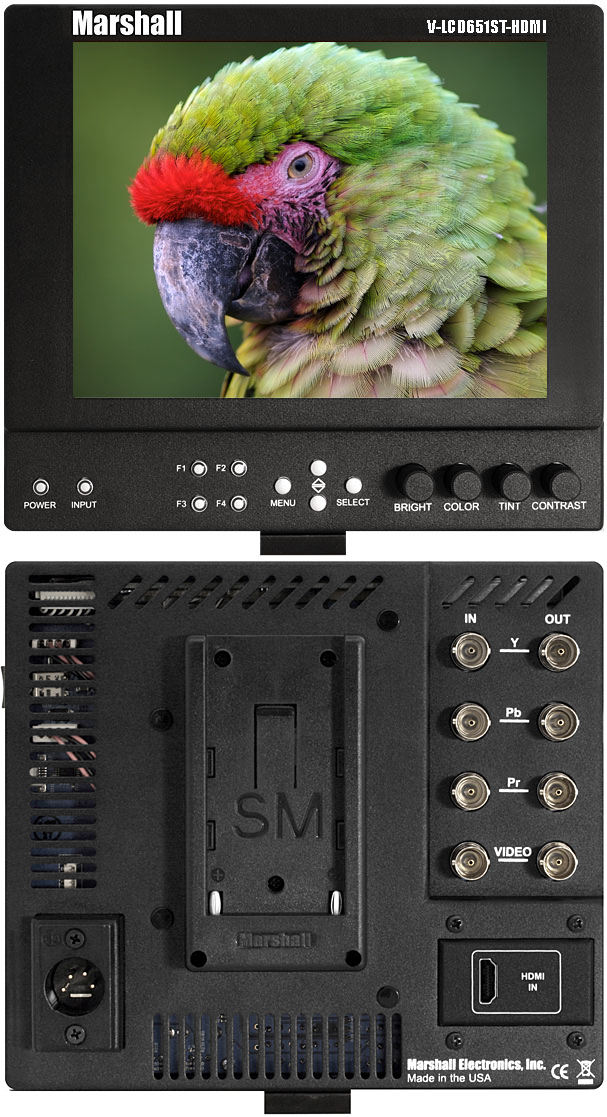
The solution to all this is an external monitor like the Marshall V-LCD651ST-HDMI. It has a 1024x768 resolution and can easily connect to the hot shoe of the Canon that allows it to be positioned in any direction. But more importantly it has an in-focus filter that actually allows you to see when your image is in focus or soft. It also has an exposure filter that allows you to see if the subject is correctly exposed. It has great playback in a higher res than the viewfinder with an anti reflection screen. In short this should be the answer to most of the problems I came across on the shoot...that and a nice spell of sun!

Wednesday, 14 April 2010

Light Rain is accepted into Cannes Film Festival

Light Rain has officially been accepted as part of this years 63rd Cannes International film festival. It will be part of the Short Film Corner and will be shown on a continuous loop with the other selected short films. It is a great venue to have your work shown to a global market and this year Tim Burton will lend his support to the festival by heading the Jury.

It is a great opportunity to rub shoulders with the Hollywood elite and get a good sun an at the same time. I hope that the only rain in the South of France will be 'Light Rain' bum-bum-ting!

For more information please visit the official website @ Cannes Film Festival